Filters
Question type

Study Flashcards

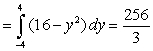
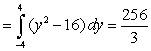
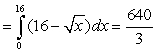
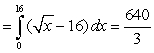
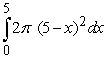
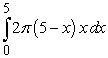
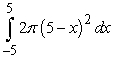
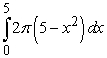
Identify the mass of a thin wire with density Identify the mass of a thin wire with density   . A)    B)    C)    D)   .


A) Identify the mass of a thin wire with density   . A)    B)    C)    D)
B) Identify the mass of a thin wire with density   . A)    B)    C)    D)
C) Identify the mass of a thin wire with density   . A)    B)    C)    D)
D) Identify the mass of a thin wire with density   . A)    B)    C)    D)

E) C) and D)
F) B) and C)

Correct Answer

verifed

verified

Use the best method available to find the volume of the solid formed by revolving the region bounded by Use the best method available to find the volume of the solid formed by revolving the region bounded by     and   about the y-axis. Write the integral that is used to find the volume. Use the best method available to find the volume of the solid formed by revolving the region bounded by     and   about the y-axis. Write the integral that is used to find the volume. and Use the best method available to find the volume of the solid formed by revolving the region bounded by     and   about the y-axis. Write the integral that is used to find the volume. about the y-axis. Write the integral that is used to find the volume.

Correct Answer

verifed

verified

Use Simpson's Rule to estimate the volume of the shape obtained by revolving the cross-section given in the table about the y-axis. y 0 0) 4375 0) 75 0) 9375 1 0) 9375 0) 75 0) 4375 0 X 1 1) 25 1) 5 1) 75 2 2) 25 2) 5 2) 75 3


A) 3
B) 17
C) 24
D) 26

E) A) and C)
F) A) and B)

Correct Answer

verifed

verified

Starting with the expression for work Starting with the expression for work   , one can change the look of the expression without changing what it represents by dividing the force F by the area it is applied over and multiplying the differential distance dx by that same area. Force divided by area is a pressure (P) , and area times the differential distance is a differential volume. Hence one can also describe work as   . A gas at constant temperature will change its pressure inversely to changes in volume,   . If a sample of gas has a pressure of 1 atmosphere when its volume is 1 L, how much work does it do when it expands from 1 L to 3 L? A)    B)    C)    D)   , one can change the look of the expression without changing what it represents by dividing the force F by the area it is applied over and multiplying the differential distance dx by that same area. Force divided by area is a pressure (P) , and area times the differential distance is a differential volume. Hence one can also describe work as Starting with the expression for work   , one can change the look of the expression without changing what it represents by dividing the force F by the area it is applied over and multiplying the differential distance dx by that same area. Force divided by area is a pressure (P) , and area times the differential distance is a differential volume. Hence one can also describe work as   . A gas at constant temperature will change its pressure inversely to changes in volume,   . If a sample of gas has a pressure of 1 atmosphere when its volume is 1 L, how much work does it do when it expands from 1 L to 3 L? A)    B)    C)    D)   . A gas at constant temperature will change its pressure inversely to changes in volume, Starting with the expression for work   , one can change the look of the expression without changing what it represents by dividing the force F by the area it is applied over and multiplying the differential distance dx by that same area. Force divided by area is a pressure (P) , and area times the differential distance is a differential volume. Hence one can also describe work as   . A gas at constant temperature will change its pressure inversely to changes in volume,   . If a sample of gas has a pressure of 1 atmosphere when its volume is 1 L, how much work does it do when it expands from 1 L to 3 L? A)    B)    C)    D)   . If a sample of gas has a pressure of 1 atmosphere when its volume is 1 L, how much work does it do when it expands from 1 L to 3 L?


A) Starting with the expression for work   , one can change the look of the expression without changing what it represents by dividing the force F by the area it is applied over and multiplying the differential distance dx by that same area. Force divided by area is a pressure (P) , and area times the differential distance is a differential volume. Hence one can also describe work as   . A gas at constant temperature will change its pressure inversely to changes in volume,   . If a sample of gas has a pressure of 1 atmosphere when its volume is 1 L, how much work does it do when it expands from 1 L to 3 L? A)    B)    C)    D)
B) Starting with the expression for work   , one can change the look of the expression without changing what it represents by dividing the force F by the area it is applied over and multiplying the differential distance dx by that same area. Force divided by area is a pressure (P) , and area times the differential distance is a differential volume. Hence one can also describe work as   . A gas at constant temperature will change its pressure inversely to changes in volume,   . If a sample of gas has a pressure of 1 atmosphere when its volume is 1 L, how much work does it do when it expands from 1 L to 3 L? A)    B)    C)    D)
C) Starting with the expression for work   , one can change the look of the expression without changing what it represents by dividing the force F by the area it is applied over and multiplying the differential distance dx by that same area. Force divided by area is a pressure (P) , and area times the differential distance is a differential volume. Hence one can also describe work as   . A gas at constant temperature will change its pressure inversely to changes in volume,   . If a sample of gas has a pressure of 1 atmosphere when its volume is 1 L, how much work does it do when it expands from 1 L to 3 L? A)    B)    C)    D)
D) Starting with the expression for work   , one can change the look of the expression without changing what it represents by dividing the force F by the area it is applied over and multiplying the differential distance dx by that same area. Force divided by area is a pressure (P) , and area times the differential distance is a differential volume. Hence one can also describe work as   . A gas at constant temperature will change its pressure inversely to changes in volume,   . If a sample of gas has a pressure of 1 atmosphere when its volume is 1 L, how much work does it do when it expands from 1 L to 3 L? A)    B)    C)    D)

E) All of the above
F) A) and D)

Correct Answer

verifed

verified

Find the area of the region bounded by the given curves. Write a single integral that represents the area. Find the area of the region bounded by the given curves. Write a single integral that represents the area.     A)  area   B)  area   C)  area   D)  area  Find the area of the region bounded by the given curves. Write a single integral that represents the area.     A)  area   B)  area   C)  area   D)  area


A) area Find the area of the region bounded by the given curves. Write a single integral that represents the area.     A)  area   B)  area   C)  area   D)  area
B) area Find the area of the region bounded by the given curves. Write a single integral that represents the area.     A)  area   B)  area   C)  area   D)  area
C) area Find the area of the region bounded by the given curves. Write a single integral that represents the area.     A)  area   B)  area   C)  area   D)  area
D) area Find the area of the region bounded by the given curves. Write a single integral that represents the area.     A)  area   B)  area   C)  area   D)  area

E) C) and D)
F) None of the above

Correct Answer

verifed

verified

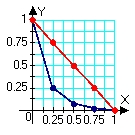
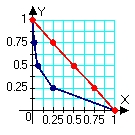
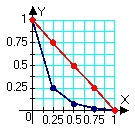
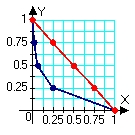
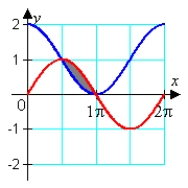
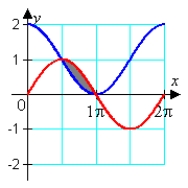
Identify the graph and the area of the region determined by the intersections of the tabulated curves using Simpson's Rule. x 0) 00 0) 25 0) 50 0) 75 1) 00 F1(x) 1) 0 0) 25 0) 07 0) 02 0) 00 F2(x) 1) 0 0) 75 0) 50 0) 25 0) 00


A) Identify the graph and the area of the region determined by the intersections of the tabulated curves using Simpson's Rule. x 0) 00 0) 25 0) 50 0) 75 1) 00 F<sub>1</sub>(x)  1) 0 0) 25 0) 07 0) 02 0) 00 F<sub>2</sub>(x)  1) 0 0) 75 0) 50 0) 25 0) 00 A)      B)      C)      D)     Identify the graph and the area of the region determined by the intersections of the tabulated curves using Simpson's Rule. x 0) 00 0) 25 0) 50 0) 75 1) 00 F<sub>1</sub>(x)  1) 0 0) 25 0) 07 0) 02 0) 00 F<sub>2</sub>(x)  1) 0 0) 75 0) 50 0) 25 0) 00 A)      B)      C)      D)
B) Identify the graph and the area of the region determined by the intersections of the tabulated curves using Simpson's Rule. x 0) 00 0) 25 0) 50 0) 75 1) 00 F<sub>1</sub>(x)  1) 0 0) 25 0) 07 0) 02 0) 00 F<sub>2</sub>(x)  1) 0 0) 75 0) 50 0) 25 0) 00 A)      B)      C)      D)     Identify the graph and the area of the region determined by the intersections of the tabulated curves using Simpson's Rule. x 0) 00 0) 25 0) 50 0) 75 1) 00 F<sub>1</sub>(x)  1) 0 0) 25 0) 07 0) 02 0) 00 F<sub>2</sub>(x)  1) 0 0) 75 0) 50 0) 25 0) 00 A)      B)      C)      D)
C) Identify the graph and the area of the region determined by the intersections of the tabulated curves using Simpson's Rule. x 0) 00 0) 25 0) 50 0) 75 1) 00 F<sub>1</sub>(x)  1) 0 0) 25 0) 07 0) 02 0) 00 F<sub>2</sub>(x)  1) 0 0) 75 0) 50 0) 25 0) 00 A)      B)      C)      D)     Identify the graph and the area of the region determined by the intersections of the tabulated curves using Simpson's Rule. x 0) 00 0) 25 0) 50 0) 75 1) 00 F<sub>1</sub>(x)  1) 0 0) 25 0) 07 0) 02 0) 00 F<sub>2</sub>(x)  1) 0 0) 75 0) 50 0) 25 0) 00 A)      B)      C)      D)
D) Identify the graph and the area of the region determined by the intersections of the tabulated curves using Simpson's Rule. x 0) 00 0) 25 0) 50 0) 75 1) 00 F<sub>1</sub>(x)  1) 0 0) 25 0) 07 0) 02 0) 00 F<sub>2</sub>(x)  1) 0 0) 75 0) 50 0) 25 0) 00 A)      B)      C)      D)     Identify the graph and the area of the region determined by the intersections of the tabulated curves using Simpson's Rule. x 0) 00 0) 25 0) 50 0) 75 1) 00 F<sub>1</sub>(x)  1) 0 0) 25 0) 07 0) 02 0) 00 F<sub>2</sub>(x)  1) 0 0) 75 0) 50 0) 25 0) 00 A)      B)      C)      D)

E) A) and C)
F) All of the above

Correct Answer

verifed

verified

Pick the integral that represents a volume calculation by cylindrical shells that is equivalent to the following integral that represents a calculation of the same volume but by the method of washers. Pick the integral that represents a volume calculation by cylindrical shells that is equivalent to the following integral that represents a calculation of the same volume but by the method of washers.   A)    B)    C)    D)


A) Pick the integral that represents a volume calculation by cylindrical shells that is equivalent to the following integral that represents a calculation of the same volume but by the method of washers.   A)    B)    C)    D)
B) Pick the integral that represents a volume calculation by cylindrical shells that is equivalent to the following integral that represents a calculation of the same volume but by the method of washers.   A)    B)    C)    D)
C) Pick the integral that represents a volume calculation by cylindrical shells that is equivalent to the following integral that represents a calculation of the same volume but by the method of washers.   A)    B)    C)    D)
D) Pick the integral that represents a volume calculation by cylindrical shells that is equivalent to the following integral that represents a calculation of the same volume but by the method of washers.   A)    B)    C)    D)

E) A) and B)
F) A) and C)

Correct Answer

verifed

verified

Compute the arc length exactly. Compute the arc length exactly.   A)    B)    C)    D)


A) Compute the arc length exactly.   A)    B)    C)    D)
B) Compute the arc length exactly.   A)    B)    C)    D)
C) Compute the arc length exactly.   A)    B)    C)    D)
D) Compute the arc length exactly.   A)    B)    C)    D)

E) A) and B)
F) A) and C)

Correct Answer

verifed

verified

In a baseball game a base-runner can attempt to advance when a fielder catches a hit ball before it reaches the ground, so long as the runner doesn't leave base before the fielder catches the ball. The fielder then attempts to throw the ball to the base ahead of the runner. If a base-runner can run from 3rd base to home plate in 4.6 sec, how fast must the centerfielder's throw leave his hand if he makes the catch then immediately throws the ball 370 ft from home plate? Assume the base-runner leaves his base at the same instant the centerfielder throws the ball, and that the ball reaches the catcher standing over home plate at the same height from which it was thrown and at the same time the runner would reach the plate. [Hint: This is basically a problem of determining how much initial vertical velocity the ball needs to stay in the air long enough to reach the plate.]


A) 80 ft/sec
B) 74 ft/sec
C) 109 ft/sec
D) 154 ft/sec

E) All of the above
F) A) and B)

Correct Answer

verifed

verified

Find the volume of the solid formed by revolving the region bounded by Find the volume of the solid formed by revolving the region bounded by   about x = 5. A)    B)    C)    D)   about x = 5.


A) Find the volume of the solid formed by revolving the region bounded by   about x = 5. A)    B)    C)    D)
B) Find the volume of the solid formed by revolving the region bounded by   about x = 5. A)    B)    C)    D)
C) Find the volume of the solid formed by revolving the region bounded by   about x = 5. A)    B)    C)    D)
D) Find the volume of the solid formed by revolving the region bounded by   about x = 5. A)    B)    C)    D)

E) A) and B)
F) A) and C)

Correct Answer

verifed

verified

The moment of inertia, I, of an object is the second moment of its mass distribution relative to an axis of rotation, The moment of inertia, I, of an object is the second moment of its mass distribution relative to an axis of rotation,   , where r is the perpendicular distance from the rotation axis and   is the density of the object at a distance r from the rotation axis. What is the moment of inertia for rotation about the y-axis of a shape described by the region bordered by   x = 0, and y = 0 revolved about the y-axis? Assume the density of the material is 1.0, so that mass and volume will be numerically equivalent. [Hint: Cylindrical shells are particularly conducive to moment-of-inertia calculations since r is everywhere the same for a given shell.] A)    B)    C)    D)   , where r is the perpendicular distance from the rotation axis and The moment of inertia, I, of an object is the second moment of its mass distribution relative to an axis of rotation,   , where r is the perpendicular distance from the rotation axis and   is the density of the object at a distance r from the rotation axis. What is the moment of inertia for rotation about the y-axis of a shape described by the region bordered by   x = 0, and y = 0 revolved about the y-axis? Assume the density of the material is 1.0, so that mass and volume will be numerically equivalent. [Hint: Cylindrical shells are particularly conducive to moment-of-inertia calculations since r is everywhere the same for a given shell.] A)    B)    C)    D)   is the density of the object at a distance r from the rotation axis. What is the moment of inertia for rotation about the y-axis of a shape described by the region bordered by The moment of inertia, I, of an object is the second moment of its mass distribution relative to an axis of rotation,   , where r is the perpendicular distance from the rotation axis and   is the density of the object at a distance r from the rotation axis. What is the moment of inertia for rotation about the y-axis of a shape described by the region bordered by   x = 0, and y = 0 revolved about the y-axis? Assume the density of the material is 1.0, so that mass and volume will be numerically equivalent. [Hint: Cylindrical shells are particularly conducive to moment-of-inertia calculations since r is everywhere the same for a given shell.] A)    B)    C)    D)   x = 0, and y = 0 revolved about the y-axis? Assume the density of the material is 1.0, so that mass and volume will be numerically equivalent. [Hint: Cylindrical shells are particularly conducive to moment-of-inertia calculations since r is everywhere the same for a given shell.]


A) The moment of inertia, I, of an object is the second moment of its mass distribution relative to an axis of rotation,   , where r is the perpendicular distance from the rotation axis and   is the density of the object at a distance r from the rotation axis. What is the moment of inertia for rotation about the y-axis of a shape described by the region bordered by   x = 0, and y = 0 revolved about the y-axis? Assume the density of the material is 1.0, so that mass and volume will be numerically equivalent. [Hint: Cylindrical shells are particularly conducive to moment-of-inertia calculations since r is everywhere the same for a given shell.] A)    B)    C)    D)
B) The moment of inertia, I, of an object is the second moment of its mass distribution relative to an axis of rotation,   , where r is the perpendicular distance from the rotation axis and   is the density of the object at a distance r from the rotation axis. What is the moment of inertia for rotation about the y-axis of a shape described by the region bordered by   x = 0, and y = 0 revolved about the y-axis? Assume the density of the material is 1.0, so that mass and volume will be numerically equivalent. [Hint: Cylindrical shells are particularly conducive to moment-of-inertia calculations since r is everywhere the same for a given shell.] A)    B)    C)    D)
C) The moment of inertia, I, of an object is the second moment of its mass distribution relative to an axis of rotation,   , where r is the perpendicular distance from the rotation axis and   is the density of the object at a distance r from the rotation axis. What is the moment of inertia for rotation about the y-axis of a shape described by the region bordered by   x = 0, and y = 0 revolved about the y-axis? Assume the density of the material is 1.0, so that mass and volume will be numerically equivalent. [Hint: Cylindrical shells are particularly conducive to moment-of-inertia calculations since r is everywhere the same for a given shell.] A)    B)    C)    D)
D) The moment of inertia, I, of an object is the second moment of its mass distribution relative to an axis of rotation,   , where r is the perpendicular distance from the rotation axis and   is the density of the object at a distance r from the rotation axis. What is the moment of inertia for rotation about the y-axis of a shape described by the region bordered by   x = 0, and y = 0 revolved about the y-axis? Assume the density of the material is 1.0, so that mass and volume will be numerically equivalent. [Hint: Cylindrical shells are particularly conducive to moment-of-inertia calculations since r is everywhere the same for a given shell.] A)    B)    C)    D)

E) None of the above
F) A) and B)

Correct Answer

verifed

verified

A solid is formed by revolving the given region about the given line. Round to three decimal places. Region bounded by y = sec x, y = 0, x = A solid is formed by revolving the given region about the given line. Round to three decimal places. Region bounded by y = sec x, y = 0, x =   , and x =   about y = -6 A)  72.737 B)  23.153 C)  250.39 D)  19.348 , and x = A solid is formed by revolving the given region about the given line. Round to three decimal places. Region bounded by y = sec x, y = 0, x =   , and x =   about y = -6 A)  72.737 B)  23.153 C)  250.39 D)  19.348 about y = -6


A) 72.737
B) 23.153
C) 250.39
D) 19.348

E) B) and D)
F) A) and D)

Correct Answer

verifed

verified

A 30-foot chain weighs 750 pounds and is hauled up to the deck of a boat. The chain is oriented vertically and the top of the chain starts 30 feet below the deck. Compute the work done.


A) 11,250 foot-pounds
B) 22,875 foot-pounds
C) 375 foot-pounds
D) 33,750 foot-pounds

E) B) and D)
F) None of the above

Correct Answer

verifed

verified

Where is the center of mass of a region of uniform density bounded by Where is the center of mass of a region of uniform density bounded by   ? A)    B)    C)    D)   ?


A) Where is the center of mass of a region of uniform density bounded by   ? A)    B)    C)    D)
B) Where is the center of mass of a region of uniform density bounded by   ? A)    B)    C)    D)
C) Where is the center of mass of a region of uniform density bounded by   ? A)    B)    C)    D)
D) Where is the center of mass of a region of uniform density bounded by   ? A)    B)    C)    D)

E) A) and B)
F) C) and D)

Correct Answer

verifed

verified

Sketch the solid bounded by Sketch the solid bounded by   and the x-axis on the interval   revolved about the line   Draw a typical shell and write an integral that can be used to compute the volume of the solid. and the x-axis on the interval Sketch the solid bounded by   and the x-axis on the interval   revolved about the line   Draw a typical shell and write an integral that can be used to compute the volume of the solid. revolved about the line Sketch the solid bounded by   and the x-axis on the interval   revolved about the line   Draw a typical shell and write an integral that can be used to compute the volume of the solid. Draw a typical shell and write an integral that can be used to compute the volume of the solid.

Correct Answer

verifed

verified

Compute the weight in ounces of an object extending from x = -5 to x = 25 with density Compute the weight in ounces of an object extending from x = -5 to x = 25 with density   slugs/in. Round answer to nearest whole number. A)  21 oz B)  4 oz C)  86 oz D)  443 oz slugs/in. Round answer to nearest whole number.


A) 21 oz
B) 4 oz
C) 86 oz
D) 443 oz

E) None of the above
F) B) and C)

Correct Answer

verifed

verified

Find the volume of the solid with cross-sectional area Find the volume of the solid with cross-sectional area   extending over the range   . A)    B)    C)    D)   extending over the range Find the volume of the solid with cross-sectional area   extending over the range   . A)    B)    C)    D)   .


A) Find the volume of the solid with cross-sectional area   extending over the range   . A)    B)    C)    D)
B) Find the volume of the solid with cross-sectional area   extending over the range   . A)    B)    C)    D)
C) Find the volume of the solid with cross-sectional area   extending over the range   . A)    B)    C)    D)
D) Find the volume of the solid with cross-sectional area   extending over the range   . A)    B)    C)    D)

E) B) and C)
F) A) and B)

Correct Answer

verifed

verified

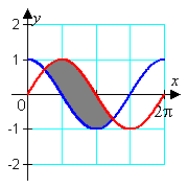
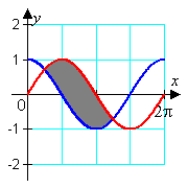
Identify the graph and the area bounded by the curves Identify the graph and the area bounded by the curves   on the interval   . A)      B)      C)      D)     on the interval Identify the graph and the area bounded by the curves   on the interval   . A)      B)      C)      D)     .


A) Identify the graph and the area bounded by the curves   on the interval   . A)      B)      C)      D)     Identify the graph and the area bounded by the curves   on the interval   . A)      B)      C)      D)
B) Identify the graph and the area bounded by the curves   on the interval   . A)      B)      C)      D)     Identify the graph and the area bounded by the curves   on the interval   . A)      B)      C)      D)
C) Identify the graph and the area bounded by the curves   on the interval   . A)      B)      C)      D)     Identify the graph and the area bounded by the curves   on the interval   . A)      B)      C)      D)
D) Identify the graph and the area bounded by the curves   on the interval   . A)      B)      C)      D)     Identify the graph and the area bounded by the curves   on the interval   . A)      B)      C)      D)

E) A) and B)
F) A) and C)

Correct Answer

verifed

verified

Find the area between the curves on the given interval. y = x4, y = x - 1, -1 ≀\leq x ≀\leq 1


A)  Find the area between the curves on the given interval. y = x<sup>4</sup>, y = x - 1, -1   \leq  x  \leq  1 A)    B)    C)    D)
B)  Find the area between the curves on the given interval. y = x<sup>4</sup>, y = x - 1, -1   \leq  x  \leq  1 A)    B)    C)    D)
C)  Find the area between the curves on the given interval. y = x<sup>4</sup>, y = x - 1, -1   \leq  x  \leq  1 A)    B)    C)    D)
D)  Find the area between the curves on the given interval. y = x<sup>4</sup>, y = x - 1, -1   \leq  x  \leq  1 A)    B)    C)    D)

E) C) and D)
F) All of the above

Correct Answer

verifed

verified

An anthill is in the shape formed by revolving the region bounded by An anthill is in the shape formed by revolving the region bounded by   and the x-axis about the y-axis. A researcher removes a cylindrical core from the center of the hill. What should the radius be to give the researcher 5% of the dirt? A)  0.8409 B)  0.6818 C)  0.1591 D)  0.3182 and the x-axis about the y-axis. A researcher removes a cylindrical core from the center of the hill. What should the radius be to give the researcher 5% of the dirt?


A) 0.8409
B) 0.6818
C) 0.1591
D) 0.3182

E) B) and C)
F) None of the above

Correct Answer

verifed

verified

Showing 41 - 60 of 85

Related Exams

Show Answer