A) 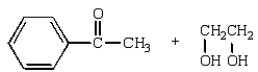
B) 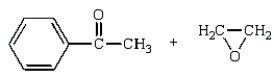
C) 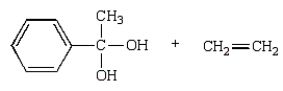
D) 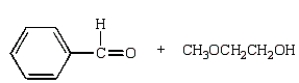
E) no reaction
G) B) and D)
Correct Answer

verified
Correct Answer
verified
A) hydroxylamine
B) hydrazine
C) methylamine
D) phenylhydrazine
E) semicarbazide
G) C) and D)
Correct Answer
verified
A
Correct Answer
verified
A) protonation of the carbonyl oxygen
B) nucleophilic attack at the carbonyl carbon
C) protonation of the oxygen of the alcohol
D) nucleophilic attack at the carbon of the alcohol
E) elimination of a water molecule
G) D) and E)
Correct Answer
verified
Correct Answer
verified
A) 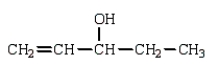
B) 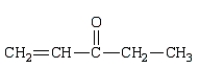
C) 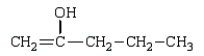
D) 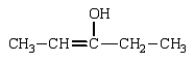
E) 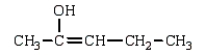
G) A) and B)
Correct Answer
verified
Correct Answer
verified
A) 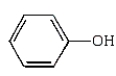
B) 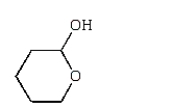
C) 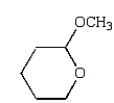
D) 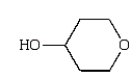
E) 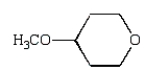
G) A) and B)
Correct Answer
verified
Correct Answer
verified
A) The first steps involve addition of the amine to the carbonyl carbon to form a tetrahedral intermediate.
B) The last steps involve elimination of water to form a carbon-nitrogen p-bond.
C) All steps are reversible.
D) The reaction involves SN2 displacement of the carbonyl oxygen by the amine nitrogen.
E) The reaction does not require a strong acid catalyst.
G) A) and D)
Correct Answer
verified
Correct Answer
verified
A) o-xylene
B) m-xylene
C) p-xylene
D) benzaldehyde
E) benzyl alcohol
G) A) and C)
Correct Answer
verified
Correct Answer
verified
A) 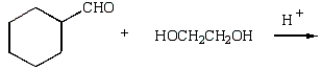
B) 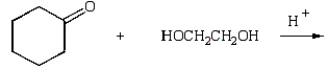
C) 
D) 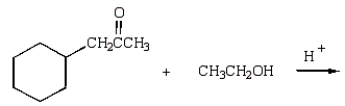
E) 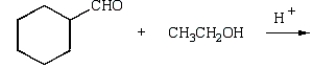
G) B) and D)
Correct Answer
verified
B
Correct Answer
verified
A) 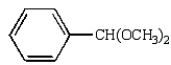
B) 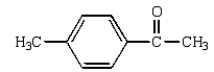
C) 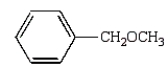
D) 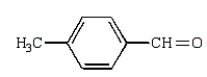
E) 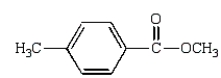
G) B) and C)
Correct Answer
verified
D
Correct Answer
verified
A) 3>2>1
B) 2>1>3
C) 2>3>1
D) 1>2>3
E) 1>3>2
G) All of the above
Correct Answer
verified
Correct Answer
verified
A) When a weak nucleophile is present, the reaction can be catalyzed by acid.
B) The nucleophile attacks the trigonal carbon of the carbonyl group.
C) Ketones are more reactive than aldehydes.
D) Nucleophiles that add irreversibly are poor leaving groups.
E) Nucleophiles can be classified as those that add reversibly to carbonyl compounds and those that add irreversibly.
G) A) and E)
Correct Answer
verified
Correct Answer
verified
A) phenyl magnesium bromide and formaldehyde
B) phenyl magnesium bromide and oxirane
C) benzaldehyde and methyl magnesium bromide
D) benzaldehyde and ethyl magnesium chloride
E) acetophenone and methyl magnesium chloride
G) B) and C)
Correct Answer
verified
Correct Answer
verified
A) NaBH4, H2O
B) LiAlH4, ether; then H3O+
C) H2, Pt
D) all of these
E) none of these
G) A) and B)
Correct Answer
verified
Correct Answer
verified
A) 1
B) 3
C) 4
D) 8
E) 14
G) A) and E)
Correct Answer
verified
Correct Answer
verified
A) 
B) 
C) 
D) 
E) 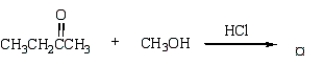
G) C) and D)
Correct Answer
verified
Correct Answer
verified
A) 0
B) 2
C) 4
D) 5
E) 8
G) D) and E)
Correct Answer
verified
Correct Answer
verified
A) NaOH
B) CrO3, H2SO4
C) CH3MgBr
D) NaBH4
E) H2, Pd
G) B) and C)
Correct Answer
verified
Correct Answer
verified
A) 3-ethyl-1-phenyl-3-pentenone
B) 3-ethyl-5-phenyl-2-penten-4-one
C) allyl benzyl ketone
D) (E) -3-ethyl-1-phenyl-3-penten-2-one
E) (Z) -3-ethyl-1-phenyl-3-penten-2-one
G) A) and C)
Correct Answer
verified
Correct Answer
verified
A) ethers
B) aldehydes
C) ketones
D) alcohols
E) thiols
G) A) and B)
Correct Answer
verified
Correct Answer
verified
A) 1
B) 2
C) 3
D) 4
E) 5
G) A) and D)
Correct Answer
verified
Correct Answer
verified
Showing 1 - 20 of 45
Related Exams